
The Marketing Mingle

Case Study

The Food Founder: From a PPT That Needed Work to an Investment That Got Closed

The Food Founder: From a Pitch That Needed Work to an Investment That Got Closed When a client asks for a better presentation, the first question we ask is: what is the story you are trying to tell? The answer tells you whether the problem is a design problem — a matter of making existing content look and flow better — or a strategy problem — a matter of what the content says and how it is structured. With The Food Founder, it was clearly the latter. The business had been shortlisted for a high-profile investor forum. The existing pitch was not ready for the room. Not because the slides were poorly designed, but because the narrative had not been built around how investors evaluate an opportunity. You cannot solve that with better slides. Defining the Investment Thesis Before any content was reviewed or restructured, we worked with the founder to define the investment thesis — the single, precise, arguable claim at the centre of the pitch. A thesis is not a description. It is an argument. It answers specific questions: Why does this market opportunity exist and why is it available now? Why is this team the right one to capture it? What does a successful outcome look like for an investor who backs this business early? Most early-stage founders have not made this argument explicitly, because building the business and narrating it for an investment audience require completely different types of thinking. Our job was to bridge that. Building the thesis took several working sessions. It required the founder to step back from the operational and think about the business from an investor’s perspective — prioritising the argument over the detail, the case over the description. That shift is not trivial, and it is the most important thing that happened in this engagement. Narrative Structure With the thesis defined, we built the pitch structure around investor decision logic. Investors move through a specific sequence: they evaluate the market before the business, the business before the financials, and the financials before the ask. A pitch that presents these in a different order — or that treats them as equally weighted rather than progressive — creates friction at every step. We structured the narrative to follow the investor’s sequence exactly, ensuring each section earned the right to the next. Descriptive language was cut throughout. Every claim was tied to a growth lever or a specific piece of evidence. The story moved from explaining the business to presenting the case for investing in it. Those are different objectives, and the language that serves each is different. Financial Clarity The financial section was rebuilt from scratch. The original numbers were present but not communicative — they required interpretation that the pitch format did not allow time for. We reframed the financials around three questions: What has the business achieved? What does the trajectory suggest? What does the investment enable? Numbers presented in that context are not a report — they are an argument for the opportunity. We made sure they read like one. Delivery Preparation Content and delivery were developed in parallel. A strong narrative with uncertain delivery produces a weak impression. We worked with the founder on pacing, on how to handle the question round, on how to project confidence without tipping into overselling. By the time the forum arrived, the presentation felt owned rather than rehearsed. Result Top three at the investor forum. Investment closed. The methodology was not complicated: define the thesis before touching the content, build the structure around how investors decide, make the numbers tell the story rather than support it, and prepare delivery as seriously as the material. In that order. Share Read Similar Stories Subscription Form (#7) Your Email IdFirst NameLast Name Get latest articles via mail Subscribe to our newsletter Subscribe

The Food Founder: From a PPT That Needed Work to an Investment That Got Closed Read More »

Twenty-Seven Years of Expertise. One Website That Finally Reflected All of It.

One Website, Better Engagement, Stronger Client Conversations, the Same 27 Years Behind It. The brief from The Leadership Coach was clear at the surface level: build a website that reflects the depth of my work. The complexity was in what that actually required, because reflecting depth is not the same as displaying everything — and for knowledge-led professionals, those two things are often in direct conflict. A site that attempts to display 27 years of expertise without a structure to guide the reader overwhelms before it impresses. Our approach was built on one principle: clarity is not reduction. It is disciplined selection. The goal was not to build a smaller version of the expertise. It was to build a smarter presentation of it. Content Audit and Prioritisation We started by mapping the full content landscape. Every framework, every domain, every type of client and engagement. Then we applied a single test to each item: does a prospective client need this in order to decide whether to reach out? Some things passed the test clearly and belonged on the entry pages. Some were valuable but secondary — relevant once a reader was already engaged, but noise for someone encountering the brand for the first time. Some were genuine expertise that the right client would eventually need to understand, but that would create friction early in the reader’s journey. Making those distinctions required the coach to step back from the desire to show everything and think about what the reader actually needs. That is a genuinely difficult shift, and it takes time to work through. Our job was to make the logic of each choice clear, so the selections felt confident rather than like loss. Narrative Hierarchy With the content prioritised, we built a hierarchy across the site — a deliberate sequence of information designed around how a prospective client actually moves from first encounter to trust to decision. The sequence: resonance first (this is for someone like me, with a problem like mine), then credibility (here is why this person is the right one to work with), then offering (here is what working together looks like), then action (how to reach out). Each section earns the next. The reader is never asked to commit more attention than the site has earned from them at that point. Most professional websites break this sequence by front-loading credentials before the reader has decided whether they care, or by explaining the offering before establishing why it is relevant. We structured this site to earn each step before taking it. Content Design Each section was written and structured to balance depth with readability. The frameworks are referenced without being fully explained — enough to signal that they exist and are specific, enough to intrigue a reader who wants to know more. The domain expertise is present throughout in the quality and precision of the language, not in an explicit list of industries covered. The 27 years of experience do not need to be stated. They are evident in how the work is described — with the confidence and specificity that only comes from genuine accumulated practice. Digital Rebuild Stronger page engagement. Clearer articulation of offerings. More confident client conversations, on both sides. The website now functions as the first, strongest proof of the coach’s expertise — not by listing it, but by demonstrating it through how the site itself is constructed. When depth is presented well, it does not need to be explained. The reader feels it. Result Within six months of the complete system going live, revenue doubled. Deal velocity improved. Leadership described a clear shift in how the firm was received at early stages — from a vendor that needed to explain itself to an institutional brand that was recognised. The methodology was disciplined rather than complicated. Build from positioning, not from aesthetics. Treat every element as infrastructure. Ensure the brand communicates what the business actually is. That is the difference between a brand that looks better and a brand that works. Share Read Similar Stories Subscription Form (#7) Your Email IdFirst NameLast Name Get latest articles via mail Subscribe to our newsletter Subscribe

Twenty-Seven Years of Expertise. One Website That Finally Reflected All of It. Read More »

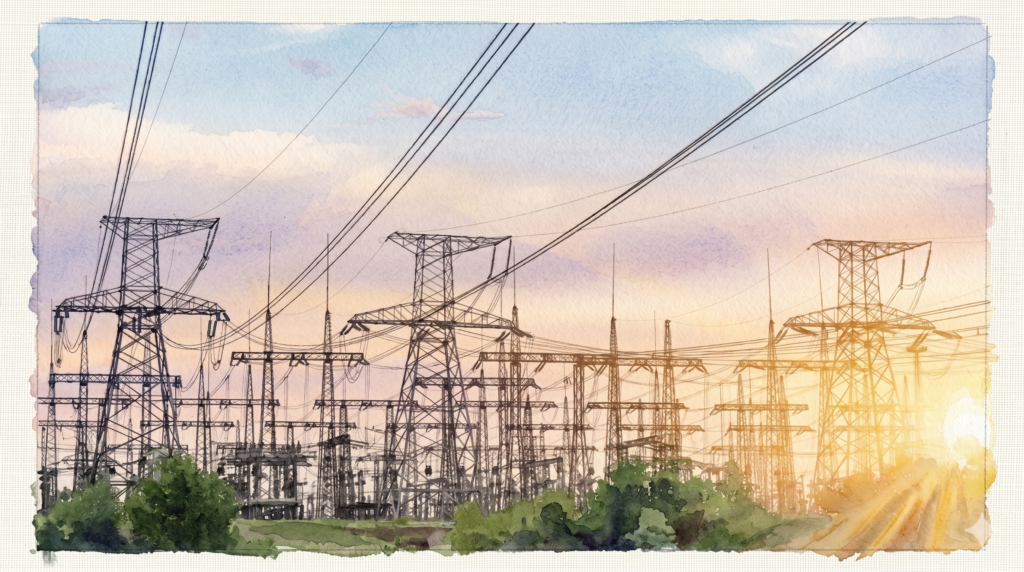
Repositioning an Industrial Power Firm for Institutional Growth

Repositioning an Industrial Power Firm for Institutional Growth with 2X revenue When a reputed power supply company came to us, the engagement started with a familiar brief: we need to updated the website. The kind of brief that arrives when a business has outgrown its brand but has not yet defined their branding. We heard a positioning problem, not a design problem. The distinction matters because the solution to each is completely different. A design solution makes an existing brand look better. A positioning solution changes what the brand communicates. Ero Power needed the second. Positioning Before Design The first phase had nothing to do with visuals. We worked with the leadership team through a structured set of sessions to answer one foundational question: how does this firm need to be perceived by the clients and institutions it wants to work with over the next several years? That question requires looking at the business from the outside in — through the lens of the clients you want to work with, rather than the work you do every day. It also requires honesty about the gap between how the business currently presents itself and what it needs to project to support growth. And it requires alignment: a brand without internal agreement on positioning does not hold together externally. The sessions produced a clear positioning framework and, equally importantly, a shared understanding across leadership of what the brand needed to do. Every visual and communication decision that followed was built on that foundation. Logo and Visual Identity The logo was redesigned with a specific brief: project authority in the industrial power and engineering sector. The resulting mark is precise and structural — it carries the weight of the work firm does and holds up across every format it appears in. Not designed to look interesting in a brand presentation. Designed to look credible in the contexts that matter. A full visual identity system was built around the logo. Documented rules governing typography, colour, spacing, and layout — specific enough to produce consistency across a firm with multiple people producing client-facing materials daily. The system gives the team a framework for communicating professionally without making design decisions from scratch each time. Documentation Standardisation Every outward-facing document format was redesigned. Proposals, reports, communication templates. For a professional services firm in engineering, documentation is the primary recurring touchpoint with clients. Inconsistent documentation signals a lack of operational discipline. Standardised, well-designed documentation signals the opposite. These were treated as structural decisions. Digital Rebuild The website was built last — and built around the new brand, not retrofitted to accommodate it. The distinction matters. An updated website carries the structure and assumptions of the old one. A rebuilt website starts from the positioning work and builds forward. The new site was structured to communicate institutional credibility: capabilities clearly articulated, delivery evidenced, visual presence aligned to the firm  was becoming. Result Within six months of the complete system going live, revenue doubled. Deal velocity improved. Leadership described a clear shift in how the firm was received at early stages — from a vendor that needed to explain itself to an institutional brand that was recognised. The methodology was disciplined rather than complicated. Build from positioning, not from aesthetics. Treat every element as infrastructure. Ensure the brand communicates what the business actually is. That is the difference between a brand that looks better and a brand that works. Share Read Similar Stories Subscription Form (#7) Your Email IdFirst NameLast Name Get latest articles via mail Subscribe to our newsletter Subscribe

Repositioning an Industrial Power Firm for Institutional Growth Read More »

Scroll to Top