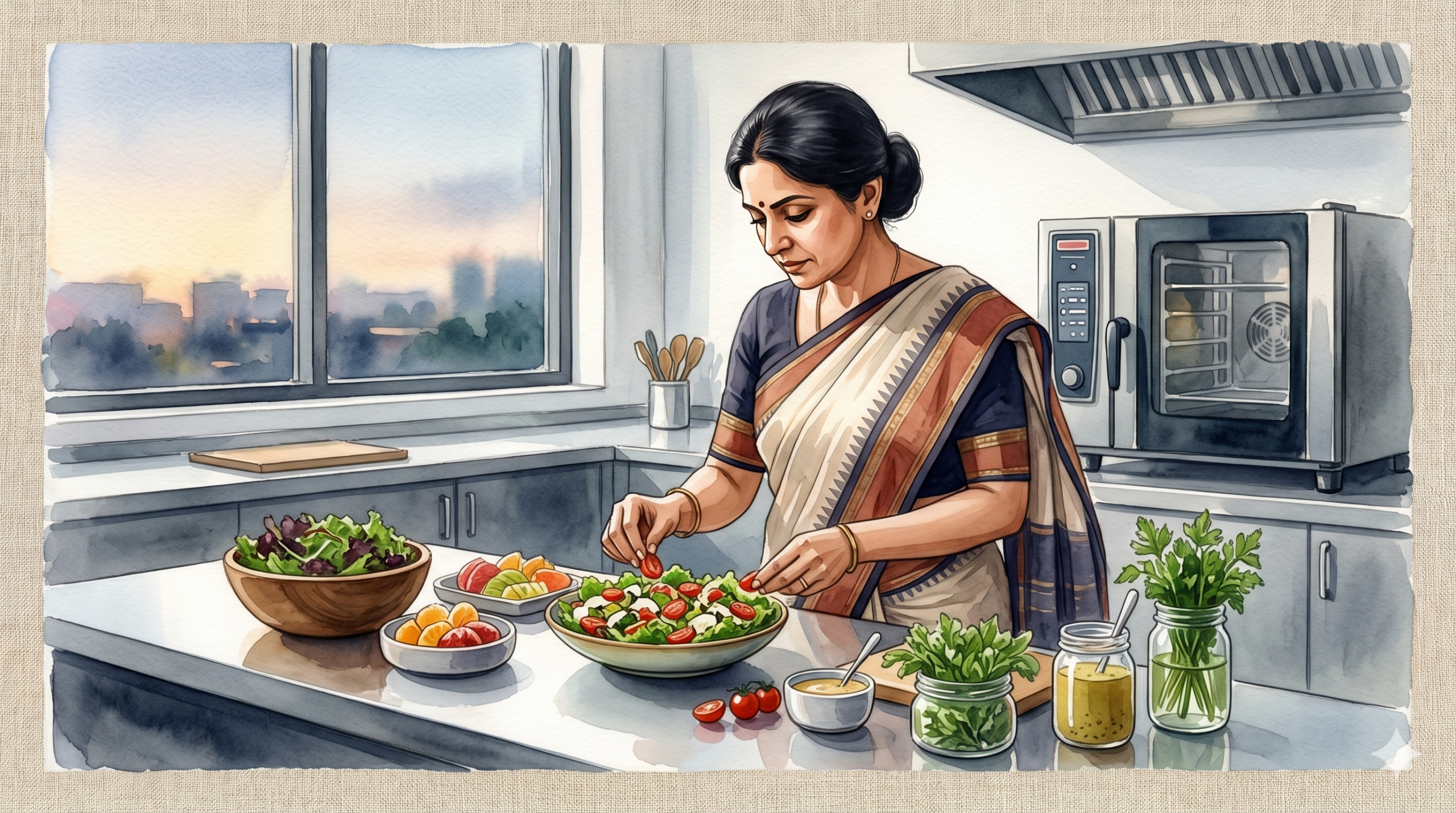
Sonal did not set out to build a business.
During the pandemic, while nursing her family back to health, she discovered something she had not known about herself: she had an extraordinary knack for making salads. Not ordinary ones. The kind that made people feel better, eat better, and come back asking for more.
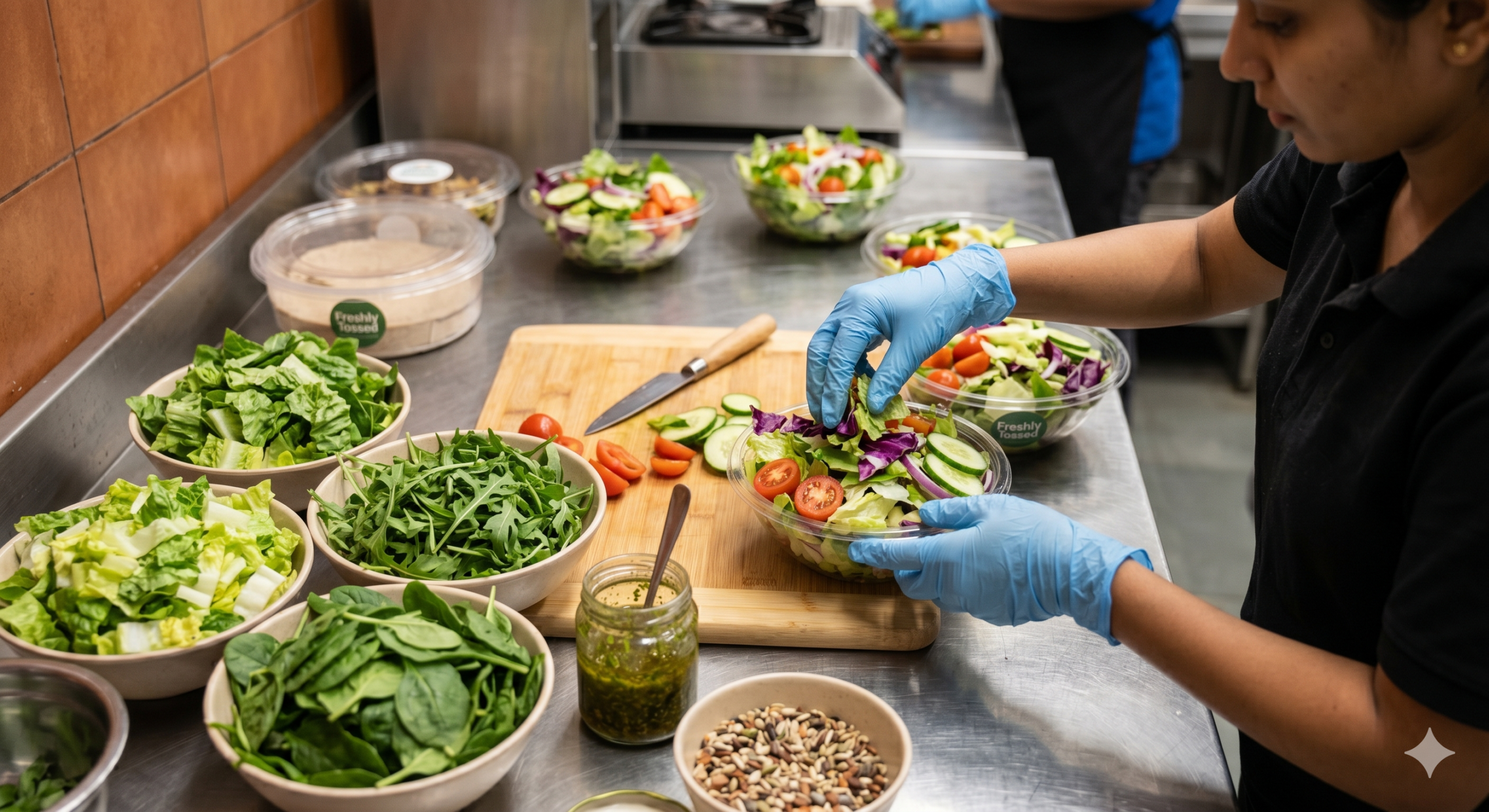
What started as care for her family turned into confidence, and confidence turned into Salad Tub: a subscription-based salad cafe delivering fresh, thoughtfully made salads to health-conscious people in Pune.
From doting mother and homemaker to food entrepreneur. The journey was real, and it was fast.
When Sonal came to The Marketing Mingle, she had a list: a website, some marketing collateral, and a platform that would let her sell salad subscriptions online. Practical, specific, and well within scope.
But the more important story is not what she came for. It is what happened next.
Building the Foundation
The collateral work moved quickly. Website, marketing materials, a subscription platform: each piece was built to reflect where Salad Tub was and where it was heading.
But even as the work was being delivered, something else became apparent. Sonal had been doing what she could to market the business on her own. She was showing up, putting content out, trying to grow the brand. The effort was there. What was missing was the framework to make the effort land.
She was not lacking energy. She was lacking a system that could convert that energy into reach, recognition, and revenue consistently.
She had been doing what she could. But cracking the code of how to showcase her brand effectively was a different challenge entirely. That was the moment The Marketing Mingle took over the marketing for Salad Tub.
As the reach started increasing and subscriptions began flowing in at a steadier pace, the work deepened. And that is when a specific opportunity came into view.
Two Nominations. Two Near Misses.
The DeAsra Foundation gives out the Entrepreneur Excellence Award each year. It recognises business owners who have built something real, demonstrated genuine capability, and shown the kind of commitment that distinguishes serious entrepreneurs from the rest.
Sonal had been nominated twice. Both times, the award had gone to someone else.
This was not a question of whether Sonal deserved it. The business was real, the growth was real, and the story behind Salad Tub was exactly the kind of story an award like this is meant to recognise. A woman who built something meaningful from the ground up, during one of the most difficult periods most people have lived through.
The diagnosis was more specific than that. The digital presence of Salad Tub, the way the brand showed up online, the way the story was being told, was not doing justice to what had been built. Two missed nominations is not bad luck. It is a signal.
Two nominations. Two near misses. The business was strong enough for the award. The brand was not yet strong enough to communicate that clearly.
Things were already moving in the right direction since The Marketing Mingle had taken over the marketing. The foundation was there. What was needed now was a deliberate, coordinated push.
A Multi-Front Campaign
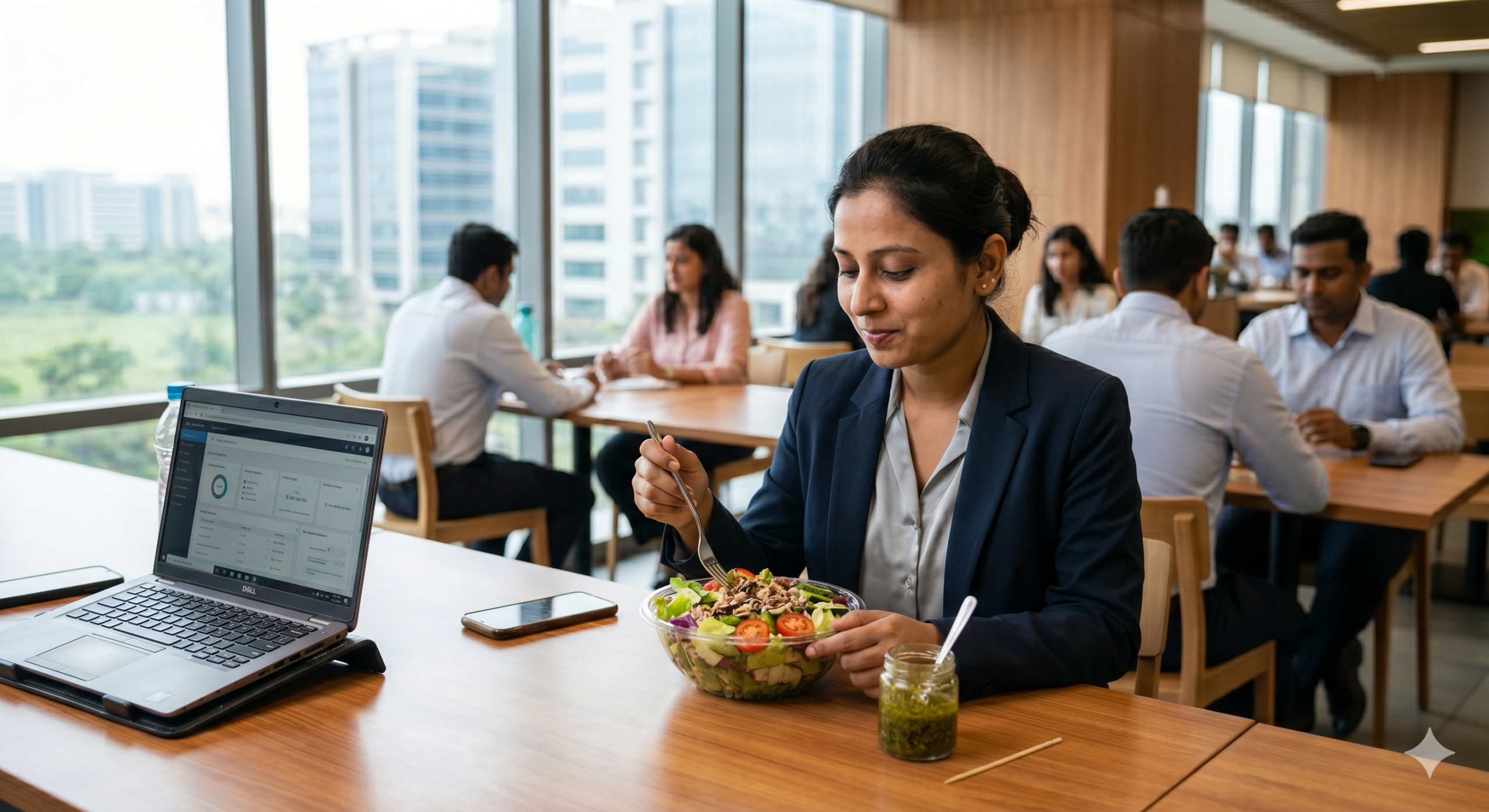
The approach was not to do one thing well. It was to do several things simultaneously, each reinforcing the others.
The digital strategy was revamped. The content calendar was restructured around posts that were designed to drive genuine engagement, not just accumulate impressions. Smartly curated content that told the Salad Tub story in a way that was specific, warm, and credible. The kind of content that makes a follower feel like they know the person behind the brand, because they do.
Alongside the social work, Sonal was prepared for the candidature interview. This is a part of the process that most applicants treat as secondary. It is not. An interview with an awards panel is a different kind of performance than running a business day to day, and the ability to speak clearly and confidently about your own journey and your own achievements is a skill that requires preparation.
The application questionnaire was worked on carefully. Not to embellish or exaggerate, but to ensure that every genuine achievement was presented in a way that landed with the weight it deserved. Real accomplishments, presented with precision. There is a significant difference between having done something and knowing how to articulate it to an evaluating panel.
Not lies. Not embellishments. Real achievements, presented in a manner that finally matched the scale of what she had actually built.
Every piece of the campaign was connected. The digital presence built credibility. The interview preparation built confidence. The written application gave the panel a complete, compelling picture of the business and the person behind it.
Third Time. Different Outcome.
Sonal won the Entrepreneur Excellence Award.
After three years of waiting. After two near misses that had been frustrating, to say the least, for someone who had built something genuinely deserving of recognition. After a pandemic pivot, years of early mornings, and the particular kind of determination it takes to keep going when the industry you are in is as competitive and unpredictable as food and hospitality.
The win was not the result of doing something new. It was the result of finally communicating what had been there all along, clearly, consistently, and through every channel that mattered.
The business had not changed between the second nomination and the third. The story had not changed. What changed was how the story was being told, and who was hearing it, and whether, when the people making the decision looked at Salad Tub, they saw a business that matched the award they were giving.
The business had not changed. The story had not changed. What changed was how clearly and confidently it was being told. That was enough.
What This Win Represents
Salad Tub is not a decade-old institution. It is a young business started by a woman who turned a pandemic moment into a livelihood and then into something that other people in the industry are now recognising.
That is rare. And it is the kind of story that is easy to undervalue when you are inside it, because the daily work of running a food business does not leave much time for stepping back and understanding what you have actually built.
Part of what The Marketing Mingle does in cases like this is stand outside the business and reflect it back clearly. Not to tell a different story. To tell the real story, with the clarity and confidence it deserves.
Sonal had that story all along. She just needed the right people to help her tell it.
THE LESSON
Recognition does not come automatically from building something real. It comes from communicating what is real, in the right way, through the right channels, at the right moment.
Sonal had the business, the achievement, and the story. Two consecutive nominations confirm that the potential for recognition was always there. What closed the gap was a brand that finally communicated the strength of the business as clearly as the business itself had earned.
The aim was never the award. The aim was to make sure that when people looked at Salad Tub, they saw exactly what it was. The award followed.
Read Similar Stories